
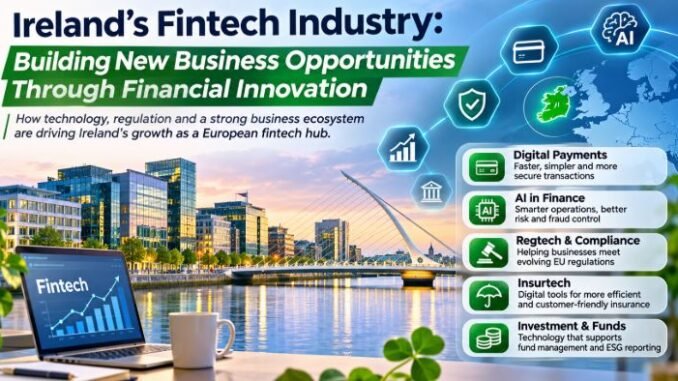
Ireland is strengthening its position as one of Europe’s important centres for financial technology. Its combination of international financial companies, skilled professionals, technology expertise and access to the European Union is attracting businesses looking to develop and expand digital financial services.
The country’s fintech sector is no longer focused only on making banking and payments easier. It is becoming part of a much wider transformation involving artificial intelligence, digital security, financial compliance, insurance technology and investment management.
For businesses, this shift is creating new opportunities. Financial institutions are looking for better ways to manage transactions, protect customer information, reduce operating costs and respond to changing regulations. Technology companies are stepping in with solutions that can make these processes faster, more accurate and easier to manage.
With more than 400 international financial firms operating in Ireland and a well-established investment fund industry, the country has developed an environment where traditional finance and modern technology can work closely together.
Technology is changing the financial services business
Artificial intelligence is becoming an important tool for financial companies in Ireland. Banks, payment providers and insurance businesses are exploring ways to use AI to improve daily operations and make better business decisions.
One major area of application is fraud prevention. AI-powered systems can examine large volumes of transactions, identify unusual activity and alert businesses to potential risks. These tools can help financial institutions respond more quickly to suspicious payments and strengthen customer protection.
AI is also changing customer service. Digital assistants can handle routine enquiries, while automated systems can help process documents, verify customer details and support financial reporting. This allows employees to spend more time on complex tasks that require professional judgement.
Another developing area is agentic AI, where systems can carry out a series of connected tasks rather than simply respond to individual instructions. Financial businesses are exploring how these tools could support operations such as document reviews, compliance checks and internal workflows.
For companies, the commercial advantage lies in using technology to improve productivity without compromising accuracy, security or customer trust. Businesses that can introduce AI responsibly may be able to operate more efficiently and offer better services.
Regulation is creating a market for fintech solutions
Financial companies across Europe must follow strict rules to protect customers, prevent money laundering and keep their systems and information secure. Meeting these requirements takes time, money and specialist knowledge.
This is creating more demand for regulatory technology, also known as regtech. These digital tools help financial businesses check customer identities, monitor transactions, manage risks and prepare compliance reports more efficiently.
New European rules are adding to this demand. Financial institutions must strengthen their technology systems, protect against cyber risks and prepare for possible service disruptions. Regulations covering digital assets are also increasing the need for better monitoring and reporting tools.
Ireland is encouraging financial innovation through initiatives such as the Central Bank of Ireland’s Innovation Sandbox Programme. This gives businesses an opportunity to test new financial ideas and technologies while understanding the regulatory requirements.
For fintech companies, this creates a clear business opportunity. They can develop digital solutions that help banks and other financial institutions manage compliance more easily, reduce paperwork and save time. As financial regulations continue to evolve, demand for these services is expected to grow across Ireland and the wider European market.
Digital payments are opening new markets
Payments remain one of the most active areas of Ireland’s fintech industry. Businesses and consumers increasingly expect transactions to be quick, convenient and secure, whether they are paying online, transferring money overseas or settling international invoices.
Irish companies such as TransferMate, FEXCO and Prommt are part of this growing payments ecosystem. International financial technology businesses, including Revolut and Mastercard, also contribute to the country’s wider payments environment.
The opportunity is particularly important for businesses involved in international trade. Exporters and importers regularly deal with multiple currencies, overseas suppliers and customers in different countries. Delays in receiving payments or managing foreign exchange can affect cash flow and increase operating costs.
Digital payment platforms can simplify these activities by offering faster transfers, clearer transaction information and easier payment management. Businesses can also connect payment services with accounting and financial management systems, reducing manual work.
Small and medium-sized enterprises stand to benefit significantly. They may not have the same financial resources as large multinational companies, but modern payment technology can give them access to services that make international business easier to manage.
As cross-border commerce expands, demand for secure and flexible payment services is likely to remain an important growth driver for Ireland’s fintech companies.
Insurance and investment businesses are adopting digital tools
Fintech innovation is also reaching the insurance and investment sectors. Insurance companies are using technology to improve customer services, assess risks and manage claims more efficiently.
This has created opportunities for insurtech businesses, which develop digital products for insurers and other financial service providers. Irish company FINEOS, for example, supplies software for insurance and employee benefits organisations operating in international markets.
Digital systems can help insurers manage large volumes of customer information, reduce paperwork and speed up claims processing. They can also support more accurate risk assessments, helping businesses make informed decisions.
Investment management and fund administration offer another important area of opportunity. Ireland has a substantial fund services industry, supporting businesses that manage investment portfolios and financial assets.
As investment operations become more complex, companies need better systems for managing information, calculating performance, preparing reports and meeting regulatory requirements. Technology can reduce manual processes and improve the quality of financial data.
Sustainability reporting is adding to this demand. Investment managers and financial institutions increasingly need to assess environmental and social risks and provide information about their activities. Fintech companies that can simplify data collection and reporting may find opportunities in this expanding market.
Government support is strengthening the business ecosystem
Ireland’s fintech development is supported by organisations that help domestic companies grow and attract international investment.
Enterprise Ireland works with Irish businesses through funding, business development and export support. Its role is particularly important for smaller fintech companies seeking to develop products, build international relationships and enter overseas markets.
IDA Ireland focuses on attracting multinational companies and supporting their operations in the country. The presence of global financial and technology businesses helps create demand for specialist services and gives local companies opportunities to build commercial partnerships.
This support is important because fintech businesses often need substantial resources before they can become commercially successful. Developing financial software requires technology investment, skilled employees, regulatory knowledge and access to customers.
A strong business ecosystem can help companies connect with investors, financial institutions and potential partners. It can also make Ireland more attractive to international businesses looking for a base from which to serve European customers.
Why international companies are looking at Ireland
Ireland offers several advantages for businesses planning to expand into Europe. Its EU membership, English-speaking workforce and established financial services industry make it an attractive location for international operations.
The country also provides access to a network of technology professionals and financial specialists. This is valuable for companies developing complex products that require knowledge of both software and financial regulations.
For an international fintech business, Ireland can serve as a base for product development, customer operations, compliance services or partnerships with established financial institutions.
However, market entry requires proper planning. Businesses must understand the regulatory permissions applicable to their activities, as well as data protection, tax and cybersecurity requirements. Operating from Ireland does not automatically give a company permission to offer every financial service throughout Europe.
Companies that prepare for these requirements from the beginning are better positioned to build sustainable operations and develop long-term relationships with customers.
Challenges that could influence future growth
Despite its strong potential, Ireland’s fintech industry faces several challenges.
The availability of skilled employees is one of the most important issues. Companies need professionals with expertise in artificial intelligence, software development, cybersecurity, payments and financial regulation. Competition for these skills can make recruitment difficult and increase employment costs.
Operating expenses are another concern, particularly for growing businesses that need office space, technology infrastructure and specialist services. These costs can place pressure on smaller companies that are still developing their customer base.
Regulatory requirements also continue to evolve. Financial technology companies must keep their products aligned with changing rules while maintaining strong internal controls. This can be demanding for businesses entering several markets at the same time.
Cybersecurity is an equally important priority. Financial companies handle sensitive personal and commercial information, making them attractive targets for cybercrime. A major security incident can affect customer confidence, interrupt operations and damage a company’s reputation.
Addressing these challenges will be essential if Ireland wants to maintain its position as a competitive European fintech centre.
The future: Turning innovation into business growth
The next stage of Ireland’s fintech development will depend on how effectively companies turn new technology into practical business solutions.
Artificial intelligence, digital payments, automated compliance, financial data management and cybersecurity are likely to remain important areas of investment. But technology alone will not guarantee success. Businesses will need to demonstrate that their products solve genuine problems and deliver measurable improvements.
For banks and insurers, this could mean lower administrative costs, faster customer services and better risk management. For smaller businesses, it could mean easier access to international payments and financial tools that were once available mainly to larger organisations.
Partnerships between established financial institutions and fintech companies will also play an important role. Traditional financial businesses bring industry experience and customer relationships, while technology companies bring specialist products and new ways of working. Combining these strengths can help accelerate innovation and bring new services to market.
Ireland has an opportunity to build on its existing financial services base and become an even stronger centre for technology-led financial solutions.
Conclusion
Ireland’s fintech industry is creating new opportunities across banking, payments, insurance, investment management and regulatory technology. Its established financial sector, international business connections and growing technology capabilities provide a strong foundation for further development.
The real opportunity is not simply to introduce more digital products. It is to help financial businesses become more efficient, secure and competitive in an increasingly connected European market.
As AI, digital payments and compliance technology continue to develop, Ireland is well placed to attract businesses looking for innovation and international growth. Its future success will depend on developing skilled talent, maintaining strong regulatory standards and turning technological progress into lasting commercial value.
