
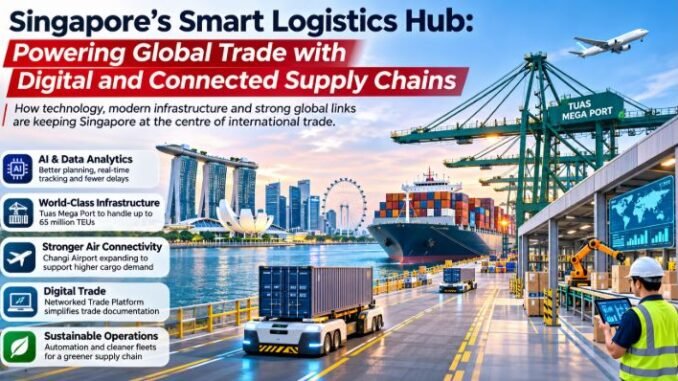
Singapore is building a new identity as a technology-driven logistics powerhouse, combining world-class ports, advanced digital systems and smart supply chains to strengthen its position in international trade.
Singapore: In today’s connected economy, moving goods from one country to another is no longer just about ships, trucks and warehouses. Businesses need faster deliveries, reliable transportation, real-time information and the ability to respond quickly when supply chains face disruptions.
Singapore understands this changing business environment. Over the years, the country has developed a strong logistics network supported by modern ports, international airports and advanced trade infrastructure. Today, it is taking another step forward by bringing artificial intelligence (AI), automation and digital technology into everyday logistics operations.
This transformation is helping Singapore strengthen its position as one of the world’s important trade and logistics centres. For international companies, the country offers more than a convenient shipping location. It provides an integrated business environment where transportation, warehousing, technology and global trade services work together.
A Strategic Location That Connects Global Markets
Singapore’s geographical position has played an important role in its development as an international logistics hub. Located along major shipping routes connecting Asia, Europe and the Middle East, the country provides businesses with access to important global markets.
Its maritime industry handles large volumes of container traffic, while Changi Airport supports international air cargo operations, particularly for high-value and time-sensitive products.
For companies involved in manufacturing, retail, electronics and pharmaceuticals, this connectivity is an important business advantage. Goods can move through Singapore and reach different regional markets through an established network of shipping and air transport services.
The presence of international freight forwarders, shipping companies and logistics providers has also helped create a strong business ecosystem.
Smart Technology Is Changing the Logistics Business
One of the biggest changes taking place in Singapore’s logistics sector is the growing use of technology.
In the past, many supply chain activities depended on manual paperwork, traditional tracking systems and separate communication between different service providers. These processes could create delays and make it difficult for businesses to monitor shipments.
Today, digital platforms are helping companies manage these activities more efficiently.
Artificial intelligence can analyse transport data, identify possible delays and support better decisions about delivery routes and inventory. Internet of Things (IoT) sensors can provide real-time information about the location and condition of goods during transportation.
These technologies are especially useful for products that require special handling, including medicines, fresh food, electronics and aerospace components.
For logistics companies, better information means fewer surprises, improved planning and more reliable customer service.
Digital Trade Makes International Business Easier
Singapore is also focusing on reducing the paperwork involved in international trade.
The government’s Networked Trade Platform (NTP) connects businesses with relevant trade and logistics services through a digital system. It helps companies manage trade-related documents and exchange information with shipping providers, banks and other business partners.
This type of digital infrastructure is important because international shipments often involve several organisations and multiple stages of documentation.
By making information easier to access and share, digital trade platforms can reduce administrative work and help businesses complete transactions more smoothly.
For small and medium-sized companies, simpler trade processes can also make international markets easier to access.
Tuas Mega Port: A Major Investment in the Future
Singapore’s investment in port infrastructure is another important part of its long-term logistics strategy.
The Tuas Mega Port project is designed to strengthen the country’s maritime capacity and improve the efficiency of container handling.
When fully developed, the port is expected to have an annual handling capacity of up to 65 million twenty-foot equivalent units (TEUs).
The project also focuses on automation and advanced port operations. These facilities are expected to support more efficient cargo movement and strengthen Singapore’s ability to handle international shipping demand.
For shipping companies and international businesses, modern port infrastructure can improve cargo handling, reduce operational delays and support larger trade volumes.
Changi Airport Strengthens Air Cargo Connectivity
While maritime transportation remains central to Singapore’s logistics industry, air cargo is equally important for businesses that depend on speed.
Changi Airport plays a major role in transporting high-value and time-sensitive goods. Electronics, pharmaceuticals and specialised industrial products often require fast and carefully managed transportation.
Singapore is also planning major airport infrastructure developments, including Changi Airport Terminal 5, as part of its long-term connectivity strategy.
The development of additional cargo facilities is expected to support future demand and strengthen the country’s position in international air freight.
Together, its port and airport networks give Singapore an important advantage in managing different types of global supply chains.
Automation Helps Companies Improve Productivity
Another major development is the increasing use of robotics and automated systems in warehouses and distribution centres.
Modern warehouses are adopting automated storage systems, robotic equipment and digital inventory management to handle goods more efficiently.
These systems can help businesses process orders faster, reduce errors and make better use of available space.
Automation is particularly important for Singapore because the country faces high operating costs, limited land availability and labour constraints.
For logistics companies, investing in technology is becoming a practical way to improve productivity and manage business costs.
The growing use of electric vehicles and cleaner transport solutions is also encouraging companies to explore more sustainable logistics operations.
Business Opportunities Across Multiple Industries
The development of smart logistics is creating opportunities across several industries.
The electronics sector benefits from reliable transportation and shipment tracking. Pharmaceutical companies need temperature-controlled supply chains to protect sensitive products. Retail and e-commerce businesses depend on efficient warehousing and fast deliveries.
Manufacturers also benefit from better coordination between suppliers, factories and international customers.
Singapore’s logistics ecosystem supports these activities by bringing together transportation providers, technology companies, warehouse operators and international trading businesses.
This creates opportunities for investment in logistics software, automation, cold-chain facilities, freight management and supply chain consulting.
For international companies looking to expand across Southeast Asia, Singapore can also serve as a regional base for managing distribution and business operations.
Challenges the Industry Cannot Ignore
Despite its strong position, Singapore’s logistics industry faces several business challenges.
High land and operating costs can put pressure on logistics companies, particularly those that depend on large warehouse facilities.
Labour shortages are another concern, making investment in automation and workforce training increasingly important.
Global trade disruptions and geopolitical tensions can also affect shipping routes, cargo costs and delivery schedules.
As a result, businesses need to build more flexible supply chains and avoid depending too heavily on a single transportation route or supplier.
Cybersecurity is another growing concern as logistics operations become increasingly digital. Protecting business information and trade systems will be important for maintaining trust and operational reliability.
Key Facts: Singapore’s Logistics Industry
- Strategic location: Singapore connects major international shipping routes and Asian markets.
- Tuas Mega Port: Planned annual capacity of up to 65 million TEUs when fully developed.
- Digital trade: The Networked Trade Platform supports electronic trade documentation and business connectivity.
- Air cargo: Changi Airport supports the movement of high-value and time-sensitive goods.
- Smart technology: AI, IoT, robotics and automation are increasingly being adopted across logistics operations.
- Global business network: International shipping and logistics companies use Singapore as an important regional base.
- Trade agreements: Singapore’s extensive free trade agreement network supports access to international markets.
The Future: From Traditional Logistics to Smart Supply Chains
The future of Singapore’s logistics industry will depend on how effectively businesses combine technology, infrastructure and skilled workers.
AI-powered planning, automated warehouses, digital trade systems and real-time shipment tracking are likely to become increasingly important in daily operations.
Companies will also need to focus on sustainability, cybersecurity and supply chain resilience as international trade becomes more complex.
For investors and businesses, this transformation creates opportunities in logistics technology, transportation infrastructure, warehouse automation and specialised cargo services.
Singapore’s experience also offers an important lesson for other developing trade economies: strong logistics is not just about building ports and airports. It is about connecting infrastructure, technology and businesses into one efficient system.
Conclusion: Building a Stronger Position in Global Trade
Singapore’s logistics industry is entering a new phase in which technology is becoming just as important as physical infrastructure. Its investment in smart ports, digital trade platforms, AI and automation is helping businesses manage goods more efficiently and respond to changing market conditions.
Although rising costs, labour shortages and global uncertainties remain challenges, the country’s focus on innovation and connectivity is creating new opportunities for the logistics business.
As international trade continues to evolve, Singapore is positioning itself not simply as a place where goods pass through, but as a major centre for managing the supply chains that connect businesses and markets around the world.
