
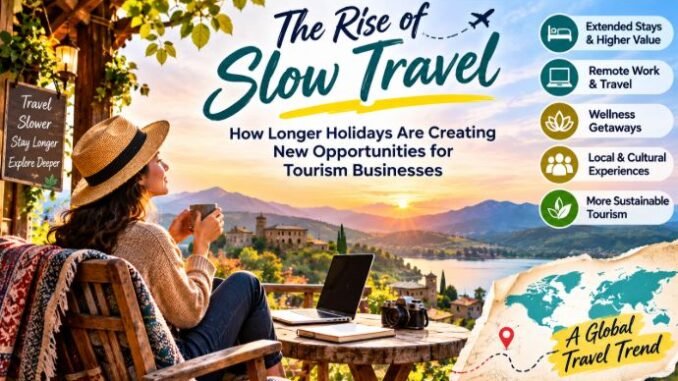
The way people travel is changing. Instead of trying to visit as many destinations as possible in a short holiday, a growing number of travellers are choosing to slow down, spend more time in one place and experience local life at a deeper level.
This shift, widely known as slow travel, is changing what people expect from a holiday. Travellers are increasingly looking beyond famous attractions and packed itineraries. They want time to explore neighbourhoods, discover local food, meet residents, enjoy nature and understand the culture of the places they visit.
For the tourism industry, this change could create significant business opportunities. Longer stays can mean more consistent demand for accommodation, greater spending at local businesses and new ways for travel operators to design meaningful experiences.
From Quick Sightseeing to Meaningful Experiences
Traditional holidays often revolve around tight schedules. Travellers move from one attraction to another, sometimes visiting several cities or countries within a short period. Slow travel takes a different approach.
It encourages people to spend more time in fewer destinations. A visitor might stay in a coastal town for two weeks, rent a countryside home for a month or spend several days exploring a historic city rather than rushing through its main attractions.
This approach allows travellers to connect more closely with their surroundings. They can visit local markets, attend cultural events, take cooking classes, explore walking trails and return to places they particularly enjoy.
For tourism businesses, the opportunity lies in creating experiences that encourage visitors to stay longer rather than simply attracting a high volume of short-term guests.
Longer Stays Could Strengthen Tourism Businesses
One of the biggest commercial opportunities associated with slow travel is the potential for longer bookings.
Hotels, guesthouses, serviced apartments, holiday rentals and boutique accommodation providers can develop packages for visitors who want to stay for a week, several weeks or even months.
Weekly and monthly rates, comfortable workspaces, reliable Wi-Fi, laundry facilities and access to kitchens can make accommodation more attractive to long-stay guests.
Longer visits may also benefit businesses beyond the accommodation sector. Travellers who remain in one destination for an extended period have more opportunities to visit restaurants, cafés, independent shops, wellness centres and local attractions.
Rather than depending entirely on a constant flow of new visitors, destinations may be able to build stronger relationships with guests who return to familiar businesses throughout their stay.
Remote Work Is Creating a New Travel Opportunity
The growth of remote and flexible working has helped blur the traditional boundary between business and leisure travel.
For some professionals, a holiday no longer needs to fit within a limited period of annual leave. They can work during the day and explore their destination in the evenings or at weekends.
This has created opportunities for accommodation providers to appeal to digital nomads and remote workers. Reliable internet, quiet work areas, comfortable rooms, longer-stay pricing and access to everyday facilities can make a destination more attractive to this group.
Hotels and rental operators can also consider work-and-stay packages, shared workspaces and community activities that help longer-term visitors feel connected.
For destinations, these travellers can provide demand beyond conventional holiday seasons, although the actual benefit depends on local infrastructure, affordability and the availability of suitable services.
Local Culture Is Becoming a Valuable Tourism Product
Slow travel is not only about staying longer. It is also about experiencing a destination more meaningfully.
Travellers may be interested in learning traditional cooking, visiting craft workshops, exploring farms, joining guided heritage walks or taking part in community-led activities.
These experiences create opportunities for local entrepreneurs, artisans, guides, farmers and small hospitality businesses.
A cooking class with a local family, a pottery workshop with an experienced craftsperson or a guided walk through a historic neighbourhood can become a memorable part of a holiday. Such activities can also help direct tourism spending towards smaller businesses and communities.
For tour operators, the challenge is to develop experiences that are authentic, well-organised and respectful of local traditions rather than turning culture into a staged attraction.
Wellness and Nature Add to the Appeal
Many travellers are also looking for holidays that offer a break from busy routines. This has created room for slow travel experiences centred on wellness, outdoor activities and nature.
Yoga retreats, meditation programmes, countryside stays, hiking holidays, cycling routes and nature-based experiences can appeal to visitors who want to spend more time away from crowded tourist centres.
Smaller destinations may benefit from this trend if they can offer quality accommodation, responsible visitor experiences and convenient access to natural attractions.
Businesses can build packages around local landscapes and activities, while ensuring that tourism does not damage the very environments that make these destinations appealing.
A Global Opportunity for Different Types of Destinations
Slow travel is not limited to one country or region. Coastal towns, historic cities, rural communities, mountain destinations and cultural centres can all attract visitors who prefer longer, more immersive holidays.
In Europe, for example, smaller towns and rural destinations can appeal to travellers interested in food, heritage and local lifestyles. In Asia, cultural experiences, wellness retreats, traditional crafts and nature-based tourism can form the foundation of longer stays. Island destinations can attract visitors seeking a slower pace, while cities can appeal to people who want to explore beyond the usual tourist districts.
The opportunity is not simply to attract more tourists. It is to encourage visitors to spend more time engaging with the destination and its local economy.
Challenges the Tourism Industry Must Address
Despite its potential, slow travel is not without challenges.
Longer stays require accommodation that is comfortable and practical for everyday living. Reliable transport, internet connectivity, healthcare access, safety and good customer service can all influence a visitor’s decision to remain in a destination.
Seasonality is another concern. Businesses need to consider how they can attract guests throughout the year rather than relying only on peak holiday periods.
There is also a responsibility to protect local communities and natural resources. An increase in long-stay visitors can put pressure on housing, infrastructure, water supplies and public spaces if tourism growth is not managed carefully.
Local participation is therefore essential. Tourism businesses should work with residents, independent suppliers and community organisations to ensure that the benefits of visitor spending are shared more widely.
The Future of Tourism May Be About Staying Longer
The rise of slow travel signals a broader change in what many people value when they take a holiday. For an increasing segment of the market, the appeal of travel lies not in how many places they can visit, but in how deeply they can experience one destination.
For tourism businesses, this creates an opportunity to rethink their offerings. Accommodation providers can develop long-stay packages, tour operators can build immersive local experiences, and smaller businesses can find new customers through cultural, culinary and wellness activities.
Destinations that combine comfortable facilities, authentic experiences, good connectivity and responsible tourism practices may be well positioned to benefit.
Slow travel may not replace conventional holidays, but it is giving the industry another way to grow. In a market where travellers increasingly value meaningful experiences, helping people stay longer could become just as important as attracting them in the first place.
