
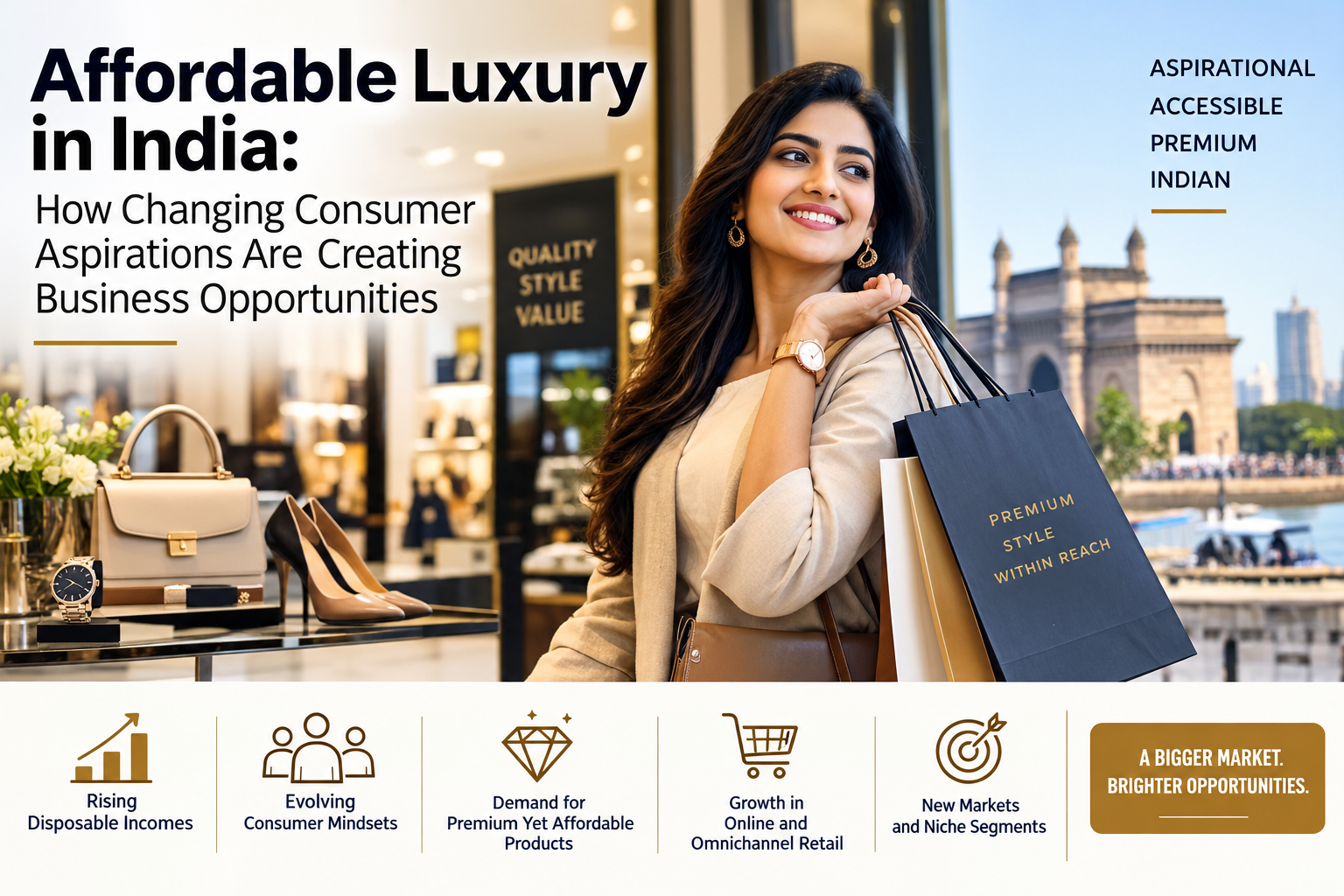
Oct 15: Affordable luxury is changing the way Indian consumers shop, spend and express their personal style. From premium skincare and contemporary fashion to fragrances, accessories and home décor, shoppers are looking for products that offer something special without the price tag associated with traditional luxury brands.
For businesses, this shift presents opportunities across fashion, beauty, lifestyle and retail. Consumers want quality, attractive designs and better experiences, but they also want to feel that their money is being well spent. This creates a challenge for brands: how can they offer a premium experience while keeping products accessible and maintaining healthy profit margins?
The answer lies in understanding what customers value, pricing products carefully and delivering on the promises made through marketing.
What Is Driving the Demand for Affordable Luxury in India?
Affordable luxury occupies the space between mass-market products and high-end luxury. It gives consumers access to distinctive designs, better materials, attractive packaging or more personalised service without the expense associated with established luxury labels.
Online shopping has made these products easier to discover. Consumers can compare brands, read reviews and explore styles from Indian and international markets without visiting multiple stores. Social media has also introduced shoppers to emerging labels and new ways of expressing their identities.
However, the growing appeal of premium products does not mean that consumers have stopped worrying about prices. Many shoppers continue to manage their budgets carefully, choosing to spend more in selected categories rather than across all their purchases.
For example, a customer might invest in a durable handbag, a versatile outfit or a quality skincare product while saving money on other everyday items. For businesses, this selective approach to spending creates an opportunity to offer products that feel aspirational but remain within reach.
What Recent Reports Reveal About Indian Consumer Spending
Deloitte India’s January 2026 report, Weaving a New India Identity: The Rise of Fast Fashion and Affordable Premium, examines changing consumer behaviour across apparel, footwear and accessories. The research draws on a nationwide survey of more than 600 respondents across metropolitan, Tier 1 and Tier 2 cities, supported by market and industry analysis.
According to Deloitte, around 40% of surveyed consumers had tried new fashion brands in the previous year. Trusted recommendations, social influence and accessible prices were among the factors encouraging this experimentation. Approximately 30% of shoppers also identified sensory and in-store experiences as an important influence on fashion purchasing decisions.
The report identified mid-premium apparel priced between ₹3,500 and ₹7,000 as one of the faster-growing segments, with a projected compound annual growth rate of around 25%. Premium apparel was projected to grow at more than 45% annually. These figures are forecasts for specific fashion segments, not confirmed growth rates for the entire affordable luxury market.
A broader view of spending comes from the Government of India’s Household Consumption Expenditure Survey 2023–24. According to figures released by the Ministry of Statistics and Programme Implementation in July 2025, average monthly per capita consumption expenditure reached ₹6,996 in urban India and ₹4,122 in rural India at current prices. These figures were higher than the corresponding estimates for 2022–23. The survey measures household consumption across goods and services; it does not specifically measure spending on affordable luxury.
Taken together, these sources provide useful context for businesses. Deloitte’s research points to growing interest in accessible premium fashion, while official consumption data shows differences in spending levels between rural and urban households. Neither source suggests that every consumer can afford premium products or that all luxury-related categories will grow at the same pace.
For brands, the opportunity is to identify customers with a genuine interest in upgrading selected purchases and offer them products at appropriate price points.
Younger Consumers Are Giving Luxury a New Meaning
For many younger shoppers, luxury is no longer defined exclusively by international labels or prominent logos. It can mean finding a well-designed outfit, building a skincare routine, buying a distinctive accessory or making a home feel more personal.
Digital platforms have made it easier to discover emerging Indian brands, compare products and follow changing trends. Consumers can also learn about materials, styling and product performance before making a purchase.
Personal taste plays an important role. Some shoppers prefer understated designs, while others look for statement jewellery, premium grooming products or accessories that reflect their personality.
This gives businesses an opportunity to develop collections for specific audiences rather than trying to appeal to everyone. A clear brand identity, thoughtful design and consistent quality can help an affordable premium label stand out in a crowded market.
Fashion and Beauty Are Creating New Business Opportunities
Fashion is one of the most visible areas of affordable luxury. Consumers are increasingly considering fabric, fit, comfort, durability and versatility alongside price.
Indian businesses can explore opportunities in contemporary ethnic wear, workwear, handbags, footwear and occasion-based clothing. A thoughtfully designed collection can appeal to shoppers who want something distinctive without paying high-end luxury prices.
Beauty and personal care offer similar possibilities. Premium fragrances, cosmetics, skincare and grooming products can attract consumers seeking an improved everyday experience.
The key is to provide a tangible benefit. Better product performance, dependable quality, thoughtful packaging or a convenient shopping experience can help justify a higher price. Packaging that looks premium but conceals an ordinary product is unlikely to generate lasting loyalty.
Brands must also ensure that product descriptions and marketing claims are accurate, particularly when making claims about ingredients, performance or product benefits.
How Digital Marketing Helps Affordable Luxury Brands Grow
Digital marketing allows emerging brands to reach customers without depending entirely on expensive retail locations or traditional advertising.
Social media is particularly useful for demonstrating how products look and perform in everyday settings. Styling videos, product demonstrations, customer reviews and behind-the-scenes content can communicate a brand’s personality and help shoppers understand what makes its products different.
Search engine optimisation can attract people actively looking for specific products, such as quality skincare within a budget, premium everyday handbags or elegant home décor. Useful website content, detailed product pages and clear pricing can help turn this interest into sales.
Influencer partnerships can introduce products to relevant audiences, but follower counts alone do not guarantee commercial results. Businesses should assess audience relevance, engagement quality, website visits, conversions and the cost of acquiring each customer.
After the first purchase, personalised recommendations and loyalty programmes can encourage customers to return. However, marketing messages should remain relevant and useful rather than overwhelming customers with constant promotions.
The objective is not simply to make a product appear luxurious. It is to communicate its real value and give customers confidence in their purchase.
The Pricing Challenge: How Can Brands Protect Profit Margins?
Affordable luxury businesses must strike a careful balance between accessibility and profitability. Setting prices too high can push away value-conscious customers, while pricing products too low can leave insufficient room to cover costs and build a sustainable business.
Brands need to consider the full cost of bringing a product to market, including materials, manufacturing, packaging, shipping, returns, marketing and retailer or marketplace commissions. A product may generate substantial sales but still be unprofitable if these expenses are not managed carefully.
One strategy is to create a tiered product range. Entry-level products can attract first-time buyers, while higher-priced collections can offer additional features, specialised designs or more premium materials. This gives customers options without requiring the brand to lower prices across its entire range.
Businesses can also improve profitability by managing inventory carefully, focusing on products with reliable demand and using customer feedback to guide product development. Limited collections may help test interest before a company commits to large production volumes.
Discounting requires particular attention. Occasional promotions can encourage trial, but frequent price cuts may train customers to wait for sales. They can also weaken the brand’s premium positioning.
A sustainable affordable luxury strategy is therefore built on cost control, clear product differentiation and pricing that reflects both customer expectations and the company’s financial needs.
The Risk of Looking Premium Without Delivering Premium Value
One of the biggest challenges in affordable luxury is maintaining credibility. A product can have sophisticated packaging, polished advertising and attractive photography, but customers will judge the brand by the product they actually receive.
If quality does not justify the price, shoppers may perceive the product as an expensive version of an ordinary mass-market item. Negative reviews and disappointing customer experiences can quickly undermine a brand’s positioning.
Businesses should decide what makes their products worth paying more for. That advantage might be better materials, longer-lasting performance, distinctive design, reliable service or thoughtful details that improve the customer experience.
Consistency matters just as much. Customers should receive the quality they expect across different products, orders and shopping channels.
Trust can become a competitive advantage when a business repeatedly delivers on its promises. It also gives customers a stronger reason to recommend the brand to friends and family.
A Practical Example: Building an Affordable Luxury Home Décor Brand
Consider an Indian home décor business targeting consumers who want to refresh their homes without undertaking expensive renovations.
Instead of competing only on price, the business could offer coordinated cushion covers, decorative lighting, table accessories and compact furniture with a consistent design theme.
Short videos could demonstrate how the products work together, while search-optimised articles could offer ideas for decorating small apartments or choosing accessories for different rooms. Clear information about materials, dimensions, maintenance and delivery would help customers make informed decisions.
The business could begin with a smaller collection to understand which products attract genuine demand. It could then expand the best-performing ranges while monitoring production costs, returns and customer feedback.
An affordable starter collection might attract first-time buyers, while coordinated products could encourage additional purchases over time.
This is an illustrative example, not a claim about a specific company’s performance. It demonstrates how a brand can combine accessible pricing, thoughtful design and disciplined business planning.
The Role of Customer Experience and Repeat Purchases
Affordable luxury is not limited to the product itself. The experience surrounding a purchase can influence whether a customer returns.
In physical stores, well-organised displays, knowledgeable staff and opportunities to examine materials can help shoppers assess quality. Online, detailed photographs, accurate descriptions, transparent return policies and reliable delivery can build similar confidence.
After-sales service also matters. Promptly resolving complaints, handling returns fairly and providing useful product guidance can strengthen customer relationships.
Businesses should track more than sales revenue. Repeat-purchase rates, customer acquisition costs, return rates, average order value and gross margins can reveal whether the business is building a sustainable customer base.
A brand that depends entirely on acquiring new customers may struggle if advertising costs rise. Encouraging satisfied customers to return can improve the economics of the business, provided that repeat purchases remain profitable.
The Future of Affordable Luxury in India
Affordable luxury is creating opportunities for brands that can combine attractive design, credible quality and accessible pricing. As consumers gain access to more choices through digital channels and organised retail, businesses will need to offer more than aspirational advertising.
Deloitte’s 2026 research suggests that accessible pricing, trusted recommendations and shopping experiences are important in India’s fashion market. The Government of India’s consumption data provides additional context on household spending, while also highlighting the need to recognise differences in purchasing power.
These findings do not guarantee growth for every business. Companies will still need to understand their target audience, test demand and manage costs carefully.
The brands best placed to succeed will be those that make premium experiences attainable without compromising product quality or financial discipline.
Ultimately, affordable luxury is not about making everyday products look expensive. It is about offering customers a meaningful upgrade at a price they feel comfortable paying. For Indian businesses, understanding that distinction can help turn changing consumer aspirations into lasting customer relationships and sustainable growth.
