
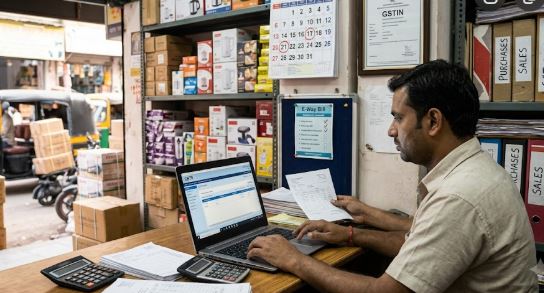
For small businesses in India, managing GST is about more than filing returns and paying taxes. It is an important part of maintaining healthy cash flow, keeping financial records organised and building a business that is ready to grow. From issuing invoices and tracking purchases to claiming Input Tax Credit (ITC) and meeting filing deadlines, even minor compliance errors can create additional costs and administrative pressure for small enterprises.
As businesses expand their customer base, adopt digital payments and enter new markets, understanding GST requirements becomes increasingly important. A well-planned compliance process can help business owners avoid common mistakes, reduce paperwork and spend more time on their core operations.
GST Registration: Understanding When Your Business Needs It
GST registration is one of the first decisions small business owners need to consider. The requirement generally depends on annual aggregate turnover, the nature of supplies, the state of operation and certain business activities.
In many states, the general registration threshold is ₹40 lakh for businesses exclusively supplying goods and ₹20 lakh for service providers and businesses making mixed supplies. Lower thresholds apply in certain states, and specific circumstances may require registration even when turnover is below the usual limit. However, exceptions apply to some categories of businesses and transactions.
For entrepreneurs, checking these requirements early can prevent complications as the business grows. A retailer entering a new state, a service provider taking on larger clients or a seller joining an online marketplace should review the GST rules applicable to their operations rather than assume that the same requirements apply to every business.
Eligible small businesses may also consider the GST Composition Scheme, which offers a simplified tax structure to qualifying taxpayers. The general turnover limit is ₹1.5 crore in most states for eligible businesses, while the separate scheme for eligible service providers has a ₹50 lakh limit. The scheme comes with restrictions, including limitations on claiming Input Tax Credit and making certain types of supplies.
Choosing the right GST arrangement requires an understanding of both compliance obligations and business needs. A lower compliance burden may be attractive, but businesses should also consider their customers, purchasing costs and plans for expansion before making a decision.
Accurate Invoicing Helps Prevent Costly Errors
Invoicing is a routine business activity, but mistakes can create problems during return filing, tax reconciliation and customer payments. A GST-compliant tax invoice generally includes the supplier’s GSTIN, invoice number and date, relevant customer details, description of goods or services, taxable value, applicable tax rates and tax amounts.
Businesses must also apply the appropriate HSN codes for goods or SAC codes for services, as required. Keeping invoice numbers sequential and maintaining records of credit notes, debit notes and adjustments can make it easier to track transactions accurately.
For a small retailer or wholesaler handling dozens of transactions every day, managing invoices manually can become difficult. Missing entries, incorrect tax rates and duplicate records may go unnoticed until the time of filing returns.
GST-enabled accounting software can help simplify invoice generation, organise purchase and sales records, and prepare information needed for return filing. However, business owners should still review the figures and ensure that the tax treatment is correct.
E-invoicing is another requirement that eligible businesses need to monitor. It applies to specified taxpayers crossing the prescribed turnover threshold, subject to the applicable rules and exemptions. Businesses covered by the requirements must generate invoices through the designated system and comply with the relevant reporting timelines.
Good invoicing practices can save time, improve record accuracy and make it easier to respond to customer queries or tax-related notices.
GST Return Filing: Why Timely Reporting Matters
Filing GST returns on time helps businesses maintain an orderly tax record and avoid unnecessary late fees or interest where applicable. For regular taxpayers, two key returns are GSTR-1 and GSTR-3B.
GSTR-1 contains details of outward supplies, while GSTR-3B summarises taxable supplies, eligible Input Tax Credit and the resulting tax liability.
For regular monthly filers, GSTR-1 is generally due on the 11th of the following month, and GSTR-3B is generally due on the 20th. Taxpayers using the Quarterly Return Monthly Payment (QRMP) scheme follow different return-filing schedules and applicable payment requirements. Actual deadlines should be checked against the taxpayer’s category and the latest notifications.
Small business owners often face several competing responsibilities, from managing inventory and paying suppliers to handling customer orders and employee expenses. GST filing can easily become a last-minute task when records are not updated regularly.
A practical solution is to set aside time each month to record sales, verify purchases, review tax liabilities and check return data before submission. Keeping the process consistent can reduce the pressure associated with filing deadlines and make discrepancies easier to identify.
Businesses should also check whether annual return requirements apply to them, as these obligations can vary according to turnover, taxpayer category and applicable exemptions.
Input Tax Credit: A Key Factor in Managing Cash Flow
Input Tax Credit is an important part of GST compliance because it allows eligible businesses to offset tax paid on qualifying business purchases against their output tax liability. When managed properly, it can help reduce the overall tax burden on business transactions and support working-capital management.
However, claiming ITC requires more than collecting purchase invoices. Businesses must satisfy the conditions under GST law, including holding valid documentation, receiving the goods or services and meeting the applicable supplier-reporting and payment requirements. Certain purchases are specifically restricted from credit.
One of the most important checks is reconciling purchase records with GSTR-2B, which provides information relevant to eligible ITC. Businesses should identify invoices that are missing, incorrectly reported or inconsistent with their own records and follow up with suppliers where necessary.
The GST portal’s Invoice Management System can also help eligible taxpayers review and manage invoice information. Regular reconciliation is particularly important for businesses dealing with multiple suppliers, frequent purchases or high transaction volumes.
The deadline for claiming eligible ITC relating to a financial year is generally 30 November following the end of that financial year or the date of filing the relevant annual return, whichever is earlier, subject to applicable statutory provisions.
For small businesses operating on tight margins, overlooking eligible credit can increase costs, while claiming credit incorrectly can lead to disputes and potential reversals. Regular checks help protect both compliance and cash flow.
E-Way Bills: Keeping Goods Moving Without Disruption
For traders, distributors, manufacturers and wholesalers, GST compliance also extends to the movement of goods. An e-way bill is generally required before the movement of goods where the consignment value exceeds ₹50,000, subject to applicable conditions, exceptions and specific provisions.
Depending on the transaction, the responsibility for generating the e-way bill may rest with the supplier, recipient or transporter. The relevant invoice, consignment details and other required information must be accurate.
Errors in documentation can delay deliveries, interrupt supply chains and increase operating costs. Businesses can reduce these risks by integrating e-way bill checks into their dispatch procedures and ensuring that staff understand the applicable requirements.
This is especially important for businesses supplying goods across state borders, where coordination between invoicing, transportation and delivery records plays a significant role in keeping operations running smoothly.
Digital Tools Can Make GST Management Easier
Digital accounting is helping small businesses organise compliance without relying entirely on manual records. GST-enabled software can bring sales invoices, purchase entries, tax calculations and filing data into one system.
Automated reminders can help business owners track deadlines, while digital records make it easier to retrieve documents and review previous transactions. These tools can be particularly useful for enterprises that do not have a dedicated finance team.
However, technology works best when supported by regular checks. Incorrect entries, outdated tax classifications or incomplete purchase records can still create problems if they are not reviewed before filing.
Businesses with complex transactions or unresolved discrepancies may benefit from consulting a qualified tax professional. Getting the details right at the outset is often less expensive and time-consuming than correcting errors later.
How GST Compliance Can Strengthen Small Businesses
Good GST management can deliver benefits beyond meeting statutory requirements. Organised financial records help business owners understand their sales, expenses, tax liabilities and working-capital needs more clearly.
Accurate documentation can also support relationships with banks, lenders, suppliers and larger corporate customers that require reliable financial and tax records. For businesses planning to expand their distribution networks, serve institutional buyers or enter new markets, a consistent compliance process can make day-to-day operations more predictable.
It can also improve internal decision-making. When invoices, purchases and tax payments are recorded properly, owners have a clearer picture of business performance and can plan inventory purchases, pricing and cash requirements with greater confidence.
For MSMEs, these improvements matter because time and working capital are limited resources. Avoiding preventable compliance issues allows businesses to direct more attention towards customers, employees and growth opportunities.
Building a Simple and Reliable GST Compliance Routine
Small businesses do not necessarily need complicated systems to manage GST effectively. They need a consistent process that fits their operations.
Maintaining updated sales and purchase records, issuing accurate invoices, reconciling GSTR-2B with purchase books, monitoring filing deadlines and reviewing tax payments are practical steps that can make compliance easier. Business owners should also reassess their GST obligations when turnover increases, new sales channels are introduced or the nature of their transactions changes.
GST rules and filing requirements can vary by taxpayer category and may change through notifications. Checking the latest official guidance or seeking professional advice when necessary can help businesses avoid relying on outdated information.
Ultimately, GST compliance is most effective when it becomes part of everyday business management rather than a task handled only at the end of the month. For India’s small businesses, accurate records, timely reporting and careful tax planning can reduce avoidable costs, protect eligible tax credits and create a stronger foundation for sustainable growth.
