
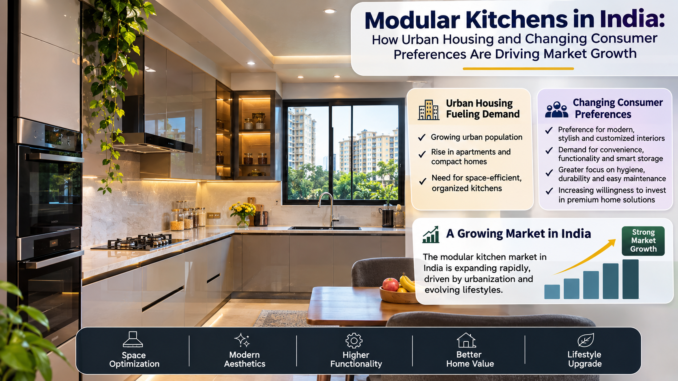
Nov 26: India’s modular kitchen industry is gaining momentum as homeowners increasingly look for kitchens that combine functionality, efficient storage and contemporary design. Changing lifestyles, growing residential development and rising interest in organised interior solutions are creating opportunities for manufacturers, furniture brands, appliance companies and interior design businesses.
According to Deloitte India’s September 2026 report, The Home Reset: How India Is Redefining the Way Homes Are Designed, Upgraded and Experienced, India’s kitchen and bathroom solutions market is expected to grow from US$18 billion in 2025 to US$28 billion by 2030. The report also projects that the country’s broader home and household market will expand to approximately US$260 billion by 2030.
Although the kitchen and bathroom category covers more than modular kitchens alone, the projections highlight the growing commercial potential of residential upgrades. Consumers are increasingly investing in better-designed living spaces, creating demand for customised cabinets, modern fittings, storage systems and integrated kitchen appliances.
For businesses, this shift presents opportunities to move beyond selling individual products and offer complete kitchen solutions that combine design, materials, installation and after-sales support.
Why Modular Kitchens Are Becoming Popular in India
The way Indian households use their kitchens is changing. Modern kitchens are expected to offer more than a place to prepare meals. They need to accommodate storage, appliances and everyday activities while maintaining an organised appearance.
Modular kitchens address these requirements through factory-made cabinets and components that can be assembled according to available space and individual preferences.
One of their biggest advantages is efficient space utilisation. In urban apartments, where kitchen areas are often compact, features such as pull-out drawers, corner units, tall cabinets and built-in appliances can make everyday activities more convenient.
Homeowners are also paying greater attention to the appearance and maintenance of their kitchens. Contemporary finishes, organised storage, coordinated colours and durable surfaces are influencing purchasing decisions.
For younger homeowners and families moving into newly developed apartments, modular kitchen installations are increasingly becoming part of the overall interior design process.
Urban Housing Creates Opportunities for Kitchen Businesses
Residential development and home renovation activity are important demand drivers for the modular kitchen industry. New apartments and independent homes create opportunities for businesses supplying kitchen cabinets, countertops, fittings, appliances and customised storage systems.
The opportunity also extends to existing properties. Homeowners are upgrading older kitchens to improve storage, replace outdated fittings and create more functional spaces.
For businesses, this means the customer base is not limited to people purchasing new homes. Renovation projects offer another avenue for kitchen manufacturers, interior designers and installation companies to expand their services.
Companies that can provide complete solutions, from initial measurements and design to manufacturing and installation, may be better positioned to attract customers looking for a convenient renovation experience.
Tier-2 Cities Offer New Growth Opportunities
Demand for contemporary interiors is no longer restricted to India’s largest metropolitan markets. As residential development expands and consumers gain greater exposure to modern design trends, smaller cities are becoming important markets for organised kitchen and furniture businesses.
Deloitte’s 2026 report found that Tier-2 households spent an average of approximately ₹3.9 lakh per home on interiors in 2025, equivalent to nearly 74% of Tier-1 spending levels.
This indicates that consumers in smaller cities are increasingly investing in organised and design-led residential interiors.
For modular kitchen brands, this creates opportunities in markets such as Jaipur, Lucknow, Kochi, Coimbatore, Indore and Bhubaneswar.
However, businesses entering these markets need to understand local purchasing preferences. While some customers may prioritise premium finishes and customised designs, others may look for affordable packages that offer durability and efficient storage.
Brands that provide different price points, reliable installation and transparent quotations can appeal to a wider customer base. Partnerships with local architects, contractors and interior designers can also help companies establish their presence.
Technology Is Changing Kitchen Design
Technology is influencing how customers plan, select and use modular kitchens. Digital design platforms allow homeowners to explore different layouts, colours, cabinet finishes and storage arrangements before making a purchase.
Three-dimensional visualisation and augmented reality tools can help customers understand how a proposed kitchen will look in their homes. This makes the planning process more interactive and helps buyers compare design options before committing to an installation.
Smart appliances are another part of modern kitchen planning. Connected refrigerators, intelligent cooking appliances, sensor-based lighting and automated ventilation systems are creating demand for kitchens that can accommodate technology.
For businesses, the opportunity lies in offering solutions that genuinely improve convenience. Product compatibility, installation quality, maintenance and after-sales support will remain important factors in customer satisfaction.
Materials and Storage Solutions Influence Consumer Choices
A modular kitchen involves several components, and customers are becoming more conscious of the materials used in their construction.
Cabinet boards, shutters, countertops, hinges and drawer mechanisms all influence the durability and overall performance of a kitchen. Since kitchens are regularly exposed to moisture, heat and frequent use, homeowners often consider maintenance requirements alongside appearance.
Storage is another important factor. Pull-out baskets, pantry units, corner storage systems, drawer organisers and vertical cabinets help make better use of available space.
Kitchen layouts also vary according to room dimensions and household requirements. L-shaped, U-shaped, parallel and straight kitchens are among the commonly used configurations.
For manufacturers, offering flexible designs and material choices can help address the needs of customers across different housing types and budgets.
Sustainability Becomes Part of Kitchen Planning
Sustainability is gradually becoming a consideration in residential interior decisions. Consumers are showing interest in products that offer durability, efficient resource use and lower maintenance requirements.
In modular kitchens, this can translate into demand for responsibly sourced materials, durable fittings, low-emission finishes and products manufactured using more efficient processes.
Energy-efficient appliances and LED lighting can also help households manage electricity consumption. Water-saving fixtures and well-planned kitchen layouts may contribute to more responsible resource use.
For manufacturers, providing clear information about material quality, product lifespan and environmental certifications can help build consumer confidence. Sustainability claims should be supported by credible product details rather than used only as marketing messages.
Digital Platforms Are Changing How Customers Discover Kitchen Brands
The customer journey for modular kitchens increasingly begins online. Homeowners browse social media, interior design websites and online marketplaces to explore layouts, compare finishes and identify brands.
Deloitte’s 2026 report found that nearly 80% of home shoppers discovered products through social media. It also noted that 57% of consumers aged 18–28 seek inspiration from creators and influencers, compared with 27% among consumers aged 45–60.
These findings highlight the growing importance of digital discovery in the home and interiors market.
For modular kitchen brands, digital marketing can help generate enquiries through design showcases, installation videos, product demonstrations and customer testimonials. However, because kitchen installations involve significant spending and customisation, online discovery often needs to be supported by physical showrooms, consultations and professional installation services.
An effective combination of online engagement and offline customer support can make the buying experience more convenient.
Business Opportunities and Challenges in the Modular Kitchen Industry
The expanding market offers opportunities for several businesses, including kitchen manufacturers, cabinet suppliers, countertop companies, hardware brands, appliance manufacturers and interior design firms.
Installation and renovation service providers can also benefit as more homeowners seek professional support rather than coordinating individual contractors themselves.
At the same time, competition is increasing. Established kitchen brands compete with regional manufacturers, local carpenters, organised furniture retailers and online sellers.
Price sensitivity, material costs, skilled labour availability and project delays remain important challenges. Since every kitchen installation involves measurements, design decisions, manufacturing and fitting, maintaining consistency across the process can be difficult.
Customers also expect clear quotations, dependable delivery timelines and reliable after-sales service. Businesses that manage these aspects effectively can build stronger relationships and encourage repeat recommendations.
What Lies Ahead for India’s Modular Kitchen Market?
The future of India’s modular kitchen industry will be influenced by residential development, renovation demand, technology adoption and changing consumer expectations.
As more households invest in improving their living spaces, demand is likely to grow for kitchens that combine practical storage with contemporary design. Businesses that offer flexible product ranges across different budgets may be better positioned to reach customers in both metropolitan and smaller-city markets.
Technology-enabled planning, durable materials, efficient layouts and professional installation are also likely to remain important areas of competition.
For manufacturers and interior design companies, the opportunity is no longer limited to selling cabinets or kitchen fittings. It lies in providing a complete experience, from initial design and material selection to installation and long-term support.
As Indian homeowners place greater importance on the functionality and appearance of their kitchens, modular solutions are becoming an increasingly relevant category within the country’s residential interiors and furniture industry.
