

Hyderabad, Apr 24 : A 42-year-old male patient underwent a routine master health check-up, during which an abdominal ultrasound incidentally revealed a mass in the left kidney measuring approximately 8 cm. The patient had no prior history of diabetes, hypertension, smoking, or any significant family history of cancer. He was completely asymptomatic at the time of diagnosis.
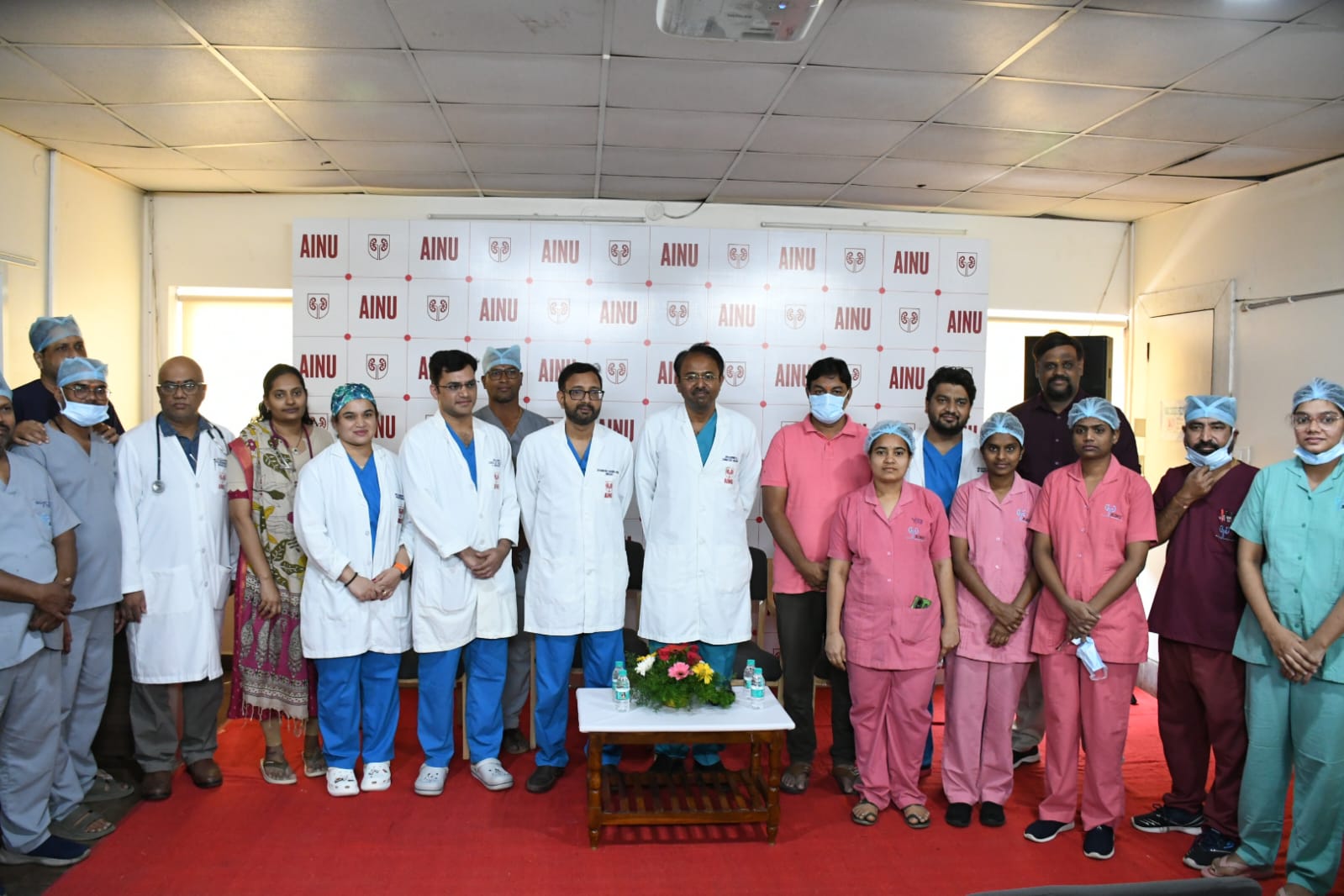
Further evaluation with a contrast-enhanced CT scan of the abdomen confirmed the presence of a renal tumor. The patient subsequently underwent surgical removal of the left kidney (radical nephrectomy). Histopathological examination of the specimen confirmed the diagnosis of clear cell renal cell carcinoma, the most common type of kidney cancer. The patient has recovered well post-surgery and is currently doing fine.
Speaking of the disease, Dr. Srinivasa Narayanam, HOD Urology – Senior Consultant Urologist, Asian Institute of Nephrology and Urology Dilsukhnagar (Hyderabad), said, Kidney cancer accounts for nearly 2–3% of all adult cancers, with an estimated 430,000 new cases and 130,000 deaths reported globally each year, and an incidence of around 16 per 100,000 population. It is more commonly seen in men, with 4–6% of cases having a familial link. Key risk factors include smoking, obesity, and hypertension. What is particularly concerning is that nearly 70–80% of kidney tumors are detected incidentally during routine imaging, as early-stage disease is often silent. The encouraging aspect, however, is that when detected early, especially when tumors are small, they are highly curable with surgery, and most patients go on to lead a normal lifespan. This highlights the importance of periodic health check-ups, including an abdominal ultrasound, for early detection. Treatment depends on the stage and size of the tumor. Smaller tumors can often be managed with kidney-sparing surgery (partial nephrectomy), while larger tumors may require removal of the entire kidney. In advanced cases, immunotherapy following surgery has shown promising outcomes in controlling the disease while maintaining a good quality of life. Survival outcomes vary significantly by stage, with five-year survival rates of 70–90% for tumors smaller than 4 cm, dropping considerably in advanced stages.”
Genetic and Risk Factors
While many cases are sporadic, a small percentage of kidney cancers may be associated with genetic conditions such as Von Hippel–Lindau disease and hereditary renal cancer syndromes. Known risk factors include smoking, obesity, hypertension, and certain occupational exposures. However, as seen in this case, kidney cancer can also occur in individuals without any identifiable risk factors.
Importance of Early Detection
A significant proportion of kidney tumors today are detected incidentally during imaging studies performed for unrelated reasons. These tumors are often asymptomatic in the early stages. Classical symptoms such as blood in urine (hematuria), flank (loin) pain, and abdominal mass usually appear in more advanced stages of the disease.
Early detection greatly improves treatment outcomes and survival rates, as localized tumors can often be completely cured with timely surgical intervention.
Public Awareness Message
This case highlights the critical importance of periodic health check-ups, even in individuals without symptoms or known risk factors. The general public is strongly encouraged to:
Conclusion
Kidney cancer, though often silent, is potentially curable when detected early. Routine health check-ups and timely specialist consultation play a vital role in saving lives.