
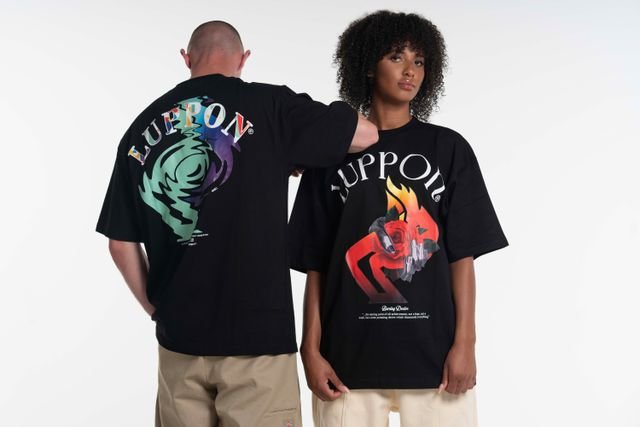
Dark shirts create a strong background for bright artwork, but ordinary colour alone may not deliver the effect a brand wants. Glow DTF adds another visual layer.
The design appears during normal wear, then selected areas become visible in low light after absorbing light. The effect depends on artwork, application, and exposure.
How Glow DTF Gang Sheets Create the Effect
A gang sheet places several designs on one printable sheet, allowing multiple graphics to be produced in a single print run. Glow-in-the-dark DTF designs use phosphorescent pigments that absorb light and release it gradually in darkness, a process explained by Britannica’s guide to phosphorescence.
-
A Glow Layer Stores Light
Glow material absorbs energy from daylight or another strong light source. Stored light creates the later glow when the shirt enters darkness.
The effect gradually becomes softer as the stored energy is released. Another period of light exposure can recharge the design.
-
Dark Fabric Creates Contrast
Black, navy, charcoal, and other dark shirts provide strong contrast around glowing details. Contrast makes illuminated areas easier to notice.
The shirt itself does not create the glow. It simply gives bright design elements a darker background against which they can stand out.
-
A White Base Supports Colour
DTF printing can use a white underbase beneath coloured artwork. The base keeps colours visible instead of allowing dark fabric to dull them.
Proper artwork preparation matters because missing or weak base coverage may affect the daytime colour and the overall appearance.
-
Gang Sheets Hold Multiple Designs
One gang sheet can contain logos, names, sleeve marks, chest graphics, and repeated artwork. Shared sheet space reduces unused print area.
Designs must have enough separation for cutting. Their dimensions should also match the intended placement on each garment.
-
Heat Bonds the Transfer
A heat press applies controlled temperature, time, and pressure. Heat activates the adhesive so the printed design can bond with the shirt fibres.
Incorrect settings can cause loose edges, uneven adhesion, scorching, or surface marks. Product instructions should guide every application.
-
Peeling Reveals the Design
The carrier film is removed according to the supplied peel instructions. Correct peeling protects small details and prevents sections from lifting.
A finishing press may also be required. This second press can improve contact and help create a more consistent surface.
-
Light Exposure Activates Visibility
The printed area needs exposure to light before its glow can be judged. A stronger charge usually creates clearer initial visibility.
Glow strength will vary with the light source, exposure time, artwork coverage, and surrounding darkness.
What Should Be Checked Before Pressing?
A simple production check helps prevent wasted transfers and garments. Review each factor before beginning a full order.
- Artwork resolution: Use clean files at the recommended resolution
- Transparent background: Remove unwanted boxes around the design
- Design spacing: Leave enough room for safe cutting
- Transfer size: Match each graphic to its garment position
- Fabric suitability: Confirm that the shirt can tolerate pressing
- Press settings: Follow the supplied temperature, pressure, and time
- Test garment: Press one item before starting the batch
- Glow exposure: Charge the design before checking its effect
| Check | Why It Matters |
| File quality | Protects fine details |
| Shirt colour | Controls contrast |
| Press pressure | Supports adhesion |
| Light exposure | Activates the glow |
| Wash care | Supports durability |
What Influences the Result on Dark Shirts?
The finished appearance depends on more than the transfer itself. Artwork choices, garment construction, pressing accuracy, and customer expectations all matter.
-
Artwork With Bold Shapes
Large letters, icons, borders, and solid shapes give glow material enough area to be noticed. Bold forms produce clearer visual impact.
Very thin lines may still print, but their glow can appear less prominent from a distance or in a room with remaining ambient light.
-
Daytime Colour Choices
A glow transfer should also look intentional when it is not glowing. Daytime colour remains part of the design during most normal use.
Choose colours that complement the shirt and brand. Do not rely on the glow effect to rescue artwork that lacks balance or readability.
-
Placement on the Shirt
Front chest, full back, sleeve, and pocket placements create different levels of visibility. Placement should support the design purpose.
A concert shirt may suit a large back graphic, while uniforms or branded apparel may need a smaller and more controlled effect.
-
Fabric Surface and Texture
Smooth cotton and compatible blends can provide an even application area. A stable surface supports complete transfer contact.
Heavy texture, seams, pockets, zippers, and raised areas can interrupt pressure. Position the artwork on a flat part of the garment.
-
Correct Pressing Conditions
Temperature, pressure, and time must work together. Balanced settings create reliable adhesion without placing unnecessary stress on the fabric.
A press should heat evenly across its platen. Cold spots or uneven pressure can leave parts of a larger design less secure.
-
Suitable Glow Transfer Selection
Businesses comparing glow DTF transfers in dark dark should select the format that suits their artwork and production method.
Upload and builder options serve different workflows. Prepared gang sheets offer layout control, while a builder can help arrange separate files.
-
Realistic Glow Expectations
Glow designs do not shine like powered lights. They release stored light gradually, with the strongest effect appearing soon after charging.
Customers should understand that brightness and duration depend on exposure conditions. Clear product descriptions can prevent false expectations.
How Can Finished Shirts Maintain Their Appearance?
Proper application starts the process, while sensible care helps the shirt and design remain presentable through regular use.
- Curing time: Let the transfer settle before the first wash
- Wash direction: Turn the shirt inside out before washing
- Water temperature: Use cool or moderate water
- Cleaning cycle: Choose a gentle cycle where practical
- Detergent choice: Avoid harsh products unless approved
- Drying method: Use low heat or air drying
- Ironing care: Do not place a hot iron directly on the design
- Storage: Keep the shirt clean, dry, and loosely folded
Conclusion
Glow DTF gang sheets can make dark shirts distinctive by combining colour artwork with details that become visible after light exposure. Strong files, suitable garments, correct pressure, and precise pressing influence the result. Retest the transfer before producing a batch, follow the application instructions, and explain the glow effect so customers know what to expect in daylight and darkness.
