
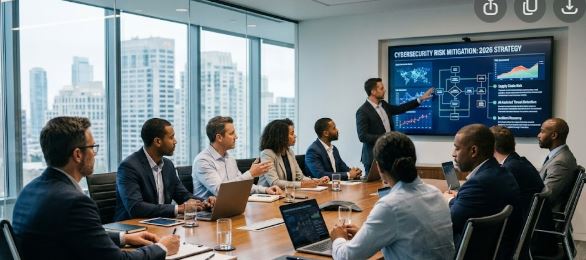
As businesses across the United States accelerate their adoption of artificial intelligence, cloud computing and digital services, protecting sensitive information has become an essential part of running a company. Technology is helping organisations improve productivity, serve customers and manage operations more efficiently. At the same time, it is creating new vulnerabilities that cybercriminals are increasingly willing to exploit.
The cybersecurity challenge in 2026 is no longer limited to preventing hackers from breaking into computer systems. Companies must also contend with AI-assisted fraud, stolen employee credentials, compromised technology vendors and attacks designed to interrupt operations or expose confidential data.
For American businesses, the consequences can be significant. A single security incident can delay production, disrupt customer services, expose financial records and damage years of brand-building efforts. Smaller companies face similar concerns, particularly when they lack dedicated security teams or depend on external technology providers.
As cyber threats become more interconnected, businesses need to look beyond individual security tools and develop a broader strategy built around prevention, early detection and rapid recovery.
Artificial Intelligence Is Changing the Cyber Threat Landscape
Artificial intelligence is giving cybercriminals new ways to make attacks more convincing and efficient. Tools that generate natural-sounding messages, imitate voices and analyse publicly available information can help criminals create highly targeted scams with less manual effort.
One growing concern is executive impersonation. An employee may receive what appears to be an urgent instruction from a senior executive, complete with convincing language or a simulated voice. If the request involves transferring funds, sharing confidential information or changing supplier payment details, a moment of misplaced trust can lead to financial losses.
AI-assisted tools can also help attackers identify potential weaknesses and automate parts of their operations. However, the level of automation and sophistication varies across attacks.
Businesses must respond by strengthening verification procedures rather than relying on employees to recognise every suspicious message. Sensitive financial transactions should require independent confirmation, while unusual requests for access or confidential information should be checked through trusted channels.
Companies can also use AI-based security tools to identify suspicious behaviour and support incident investigations. The priority is to ensure that technological advances strengthen the organisation’s defences rather than introduce new risks through uncontrolled use.
Supply Chain Weaknesses Can Put Entire Businesses at Risk
Businesses increasingly depend on external software providers, cloud platforms, payment services and specialist vendors. These partnerships make operations more efficient, but they also create additional points of vulnerability.
A cyberattack against a smaller supplier can sometimes provide access to a much larger organisation. Similarly, compromised software updates, insecure integrations or stolen vendor credentials can expose systems that would otherwise be difficult to penetrate.
The challenge is particularly important for companies that rely on multiple technology providers to manage customer information, financial transactions and daily operations. A weakness in one part of this network can have consequences across the business.
American companies should assess the security practices of their critical suppliers and review access permissions regularly. Contracts should establish clear expectations for data protection, incident reporting and security responsibilities.
Businesses should also prepare alternatives for essential services and test how they would respond if a major provider became unavailable. Managing supplier security as an ongoing business responsibility can reduce the risk of unexpected disruption.
Digital Fraud Is Becoming Harder to Detect
Cybercriminals do not always need to compromise an entire network to cause damage. In many cases, they exploit ordinary business processes and human trust to obtain money or sensitive information.
Business email compromise is one example. Criminals may impersonate executives, employees or suppliers and request urgent payments, invoice changes or access to confidential records. AI-generated content can make these messages appear more credible.
Synthetic identity fraud presents a related challenge, particularly for businesses involved in lending, payments and digital customer onboarding. Fraudsters may combine genuine and fabricated personal information to create identities that can pass weak verification checks.
The most effective response combines technology with clear procedures. Companies should independently verify changes to supplier banking details, introduce appropriate approval controls for large transfers and monitor unusual account activity.
Customer onboarding processes should also use risk-based identity checks. These safeguards can help reduce fraudulent transactions while protecting legitimate customers from unnecessary delays.
Ransomware Remains a Serious Business Continuity Threat
Ransomware continues to be one of the most disruptive forms of cybercrime. An attack can prevent employees from accessing essential files, interrupt business applications and threaten the disclosure of confidential information.
Some criminal groups use ransomware-as-a-service arrangements, allowing affiliates to deploy tools and infrastructure developed by others. This model has helped make ransomware operations more accessible to different types of attackers.
Extortion tactics have also evolved. Criminals may steal data before encrypting systems and threaten to release it if the victim refuses to pay. In some cases, they may put additional pressure on customers or business partners to increase the consequences of an incident.
For companies, the resulting costs can extend beyond the immediate technical damage. Lost revenue, delayed orders, recovery expenses and reputational harm can continue long after systems have been restored.
Businesses should maintain secure backups, test their ability to restore critical systems and restrict unnecessary access to sensitive networks. Regular software updates, endpoint protection and multi-factor authentication can further reduce exposure.
A documented incident response plan is equally important. Companies need to know how to isolate affected systems, preserve evidence, assess legal obligations and communicate with customers and other stakeholders during an emergency.
Stolen Credentials and Software Vulnerabilities Create Hidden Risks
Employee accounts have become important targets because compromised login details can provide access to email, cloud applications and internal business systems.
Phishing attacks, password reuse and malware designed to steal credentials can expose accounts belonging to employees, contractors or administrators. The risk can increase when businesses fail to remove inactive accounts or allow users to retain access beyond their responsibilities.
Unpatched software presents another significant concern. Once a serious vulnerability becomes publicly known, attackers may attempt to exploit it before every affected organisation has installed the necessary security updates.
Companies need a clear view of the devices, applications and cloud services they use. Security teams should prioritise vulnerabilities that are actively exploited or affect critical systems, rather than treating every software update as equally urgent.
Multi-factor authentication, password managers, restricted administrator privileges and regular access reviews can help reduce the risk of account compromise. Where immediate patching is not possible, temporary safeguards should limit exposure until the underlying weakness can be addressed.
Cloud Security and Data Protection Require Greater Attention
Cloud services allow businesses to store information, support remote teams and scale operations without maintaining all their own infrastructure. However, insecure configurations, excessive permissions and poorly protected application interfaces can expose sensitive data.
A breach may involve customer records, financial information, intellectual property or confidential business communications. Depending on the circumstances, the organisation may also face legal claims, regulatory scrutiny and obligations to notify affected individuals.
Businesses should understand where their most sensitive information is stored, who can access it and how it is protected. Encryption, access controls, configuration reviews and continuous monitoring are important elements of a sound cloud security strategy.
The growing use of AI applications introduces another consideration. Employees may unintentionally expose confidential material by entering it into tools that have not been approved for business use.
Clear policies should explain which information can be shared with external AI systems and how sensitive data must be handled. Companies should also review the security and privacy practices of the technology providers they use.
Cybersecurity Must Become a Leadership Responsibility
Cybersecurity is no longer an issue that can be left entirely to technical teams. It directly affects business continuity, financial performance, customer confidence and regulatory compliance.
Company leaders need to understand which systems are essential to operations, what information would cause the greatest damage if exposed and how quickly the organisation could recover from a major incident.
This assessment should guide security spending. A smaller business may achieve meaningful improvements by securing email accounts, enabling multi-factor authentication and maintaining tested backups. A larger enterprise may need advanced monitoring, dedicated incident response teams and more formal supplier risk management.
Employee training should also reflect how modern attacks occur. Staff need to understand how to verify unusual requests, report suspicious activity and handle sensitive information responsibly.
Regular incident simulations can help management identify gaps in decision-making and communication before a real emergency occurs. A strong security culture develops when employees understand that protecting business information is a shared responsibility.
Practical Steps to Strengthen Business Cybersecurity in 2026
American companies can improve their security posture by concentrating on measures that reduce their most significant risks.
-
Secure employee accounts: Enable multi-factor authentication and review access privileges regularly.
-
Train employees to recognise fraud: Cover phishing, executive impersonation, suspicious payment requests and AI-generated scams.
-
Review third-party risks: Assess critical suppliers and restrict their access to essential systems.
-
Protect important data: Use suitable encryption, access controls and secure storage practices.
-
Update software promptly: Prioritise critical and actively exploited vulnerabilities.
-
Maintain reliable backups: Test recovery procedures and protect backups from unauthorised access.
-
Monitor suspicious activity: Investigate unusual logins, unexpected data transfers and abnormal system behaviour.
-
Prepare for cyber incidents: Establish response responsibilities and practise restoring essential operations.
-
Set clear AI usage policies: Prevent confidential business information from being shared through unauthorised tools.
The National Institute of Standards and Technology’s Cybersecurity Framework 2.0 provides a useful structure for organising these efforts around governance, risk identification, protection, detection, response and recovery.
The right approach will differ according to the size of the business, its industry, its regulatory obligations and the sensitivity of the information it handles.
Conclusion: Building Business Resilience Against Cyber Threats
The cybersecurity risks facing American companies in 2026 reflect a rapidly changing digital environment. AI-assisted attacks, supply chain vulnerabilities, financial fraud, ransomware and compromised credentials are challenging businesses to rethink how they protect their operations.
No organisation can guarantee that every attack will be prevented. However, companies can significantly improve their preparedness by strengthening access controls, securing critical data, monitoring emerging threats and developing reliable recovery plans.
For business leaders, the objective should be to make cybersecurity an integral part of operational planning rather than a response to an isolated technical problem. Investment in employee awareness, supplier oversight and incident preparedness can help limit disruption and protect customer relationships.
Ultimately, strong cybersecurity is about preserving business continuity and trust. Companies that build security into everyday decisions will be better positioned to manage digital risks, protect their reputation and pursue sustainable growth in an increasingly connected economy.
